
Regionale Angebote: Casinos ohne Oasis speziell für deutsche Spieler
November 14, 2024Lichtreflexionen im Tierreich: Feuer, Augen und Glühpilze
November 15, 2024The next step with this client is to develop a change plan. Your task in the process is to help the client develop a change plan that is acceptable, accessible, and appropriate. Once a client decides to change a substance use behavior, he or she may already have ideas about how to make that change.
Challenges and Misconceptions
- In 2005, ASAM’s public policy statement on recovery highlighted a state of psychological and physical health in which an individual’s abstinence from substance use was “complete and comfortable”14.
- Exhibit 3.4 provides examples of closed and open questions.
- You are not responsible for coming up with all the good ideas about change, and you probably don’t have the best ideas for any particular client.
- Try to anticipate potential obstacles and how the client might respond to them before the client takes steps to implement the plan.
- Rather, functioning at three years following treatment (profiles 3 and 4) predicted better psychological functioning at ten years following treatment.
- Whether you’re looking for answers for yourself or for someone you love, we’re here to give you the best information available.
I’m Dr. Matthew Ziegelmann, a urologist at Mayo Clinic. In this video, we’ll cover the basics of erectile dysfunction. Whether you’re looking for answers for yourself or for someone you love, we’re here to give you the best information available. Erectile dysfunction, also known as impotence, is defined by difficulty getting and keeping an erection. It’s been reported that more than half of men between the ages of 40 and 70 experience some form of ED. Experiencing difficulty with erections from time to time is usually no cause for concern.
Links to NCBI Databases
It reflects resilience, growth, and a renewed ability to lead a fulfilling life. For many, this phase represents the culmination of hard work, determination, and the support of a comprehensive treatment plan. Talk to a healthcare provider if you are struggling with substance use. It’s essential to seek help if you are having difficulty cutting back, find yourself consuming more substances than you meant to, or otherwise feel that your personal life, relationships, or health have been affected. Experimenting with—or even being prescribed—a drug or substance can sometimes lead to occasional use and then to heavy use.
Changes Diagnostic Thresholds

Exhibit 3.4 provides examples of closed and open questions. As you read these examples, imagine you are a client and notice the difference in how you might receive and respond to each kind of question. Understanding the role of resistance and how to respond to it can help you maintain good counselor-client rapport. Resistance in SUD treatment has historically been considered a problem centered in the client. As MI has developed over the years, its alcoholism understanding of resistance has changed. Instead of emphasizing resistance as a pathological defense mechanism, MI views resistance as a normal part of ambivalence and a client’s reaction to the counselor’s approach in the moment (Miller & Rollnick, 2013).
Don’t assume that all clients need a structured method to develop a change plan. Many people can make significant lifestyle changes and initiate recovery from SUDs without formal assistance (Kelly, Bergman, Hoeppner, Vilsaint, & White, 2017). For clients who need help developing a change plan, remember to continue using MI techniques and OARS to move the process from why change and what to change to how to change (Miller & Rollnick, 2013).
- This is not only because erections take longer to develop, but also that other contributing factors may come into play.
- SUD affects a person’s mental and physical health in profound ways.
- Erectile dysfunction can be an uncomfortable topic to discuss with your doctor, with your partner and with your friends.
- By narrowing the focus from drinking as a general concern to stopping drinking as a possible target behavior, the counselor moved into the MI process of evoking.
- There may be many different pathways to achieve the desired goal.
- But if erectile dysfunction is ongoing, it can cause stress, affect self-confidence and add to challenges with a partner.
In 2005, ASAM’s public policy statement on recovery highlighted a state of psychological and physical health in Drug rehabilitation which an individual’s abstinence from substance use was “complete and comfortable”14. Empirical support for a broader conceptualization of recovery has been reviewed in recent work16–18 and also expressed by individuals who self-identify as being in recovery19–21. In MI, there are several kinds of reflective listening responses that range from simple (i.e., repeating or rephrasing a client statement) to complex (i.e., using different words to reflect the underlying meaning or feeling of a client statement).
- Greater frequency of client sustain talk in sessions is linked to poorer substance use treatment outcomes (Lindqvist, Forsberg, Enebrink, Andersson, & Rosendahl, 2017; Magill et al., 2014; Rodriguez, Walters, Houck, Ortiz, & Taxman, 2017).
- Millions of men are able to successfully treat their erectile dysfunction.
- Offer affirmations of client self-efficacy, hope, and confidence in the client’s ability to change.
- An individual may be considered “recovered” if both remission from AUD and cessation from heavy drinking are achieved and maintained over time.
As a person becomes dependent on the substance, the substance will begin to control the person’s life. To find out how to access local community support, you can search our list of recovery community organizations. Please visit our blog outlining an extensive list of pathways of recovery that include social and peer-based resources, cultural and faith-based supports, and clinical treatment information. Describing how people in similar situations have successfully changed their behavior. Other clients in treatment can serve as role models and offer encouragement. MI doesn’t work if you focus only on how clients’ substance use behavior is in conflict with external pressure (e.g., family, an employer, the court) (Miller & Rollnick, 2013).
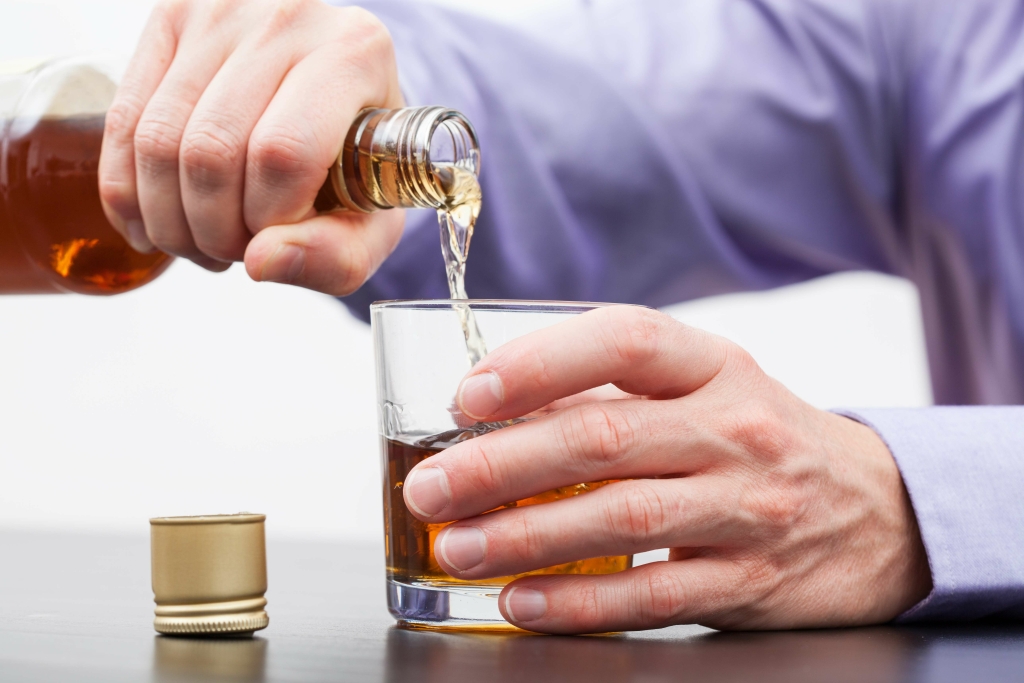
It focuses on mobilizing the client’s own resources for change. It is consistent with the healthcare model of helping people learn to self-manage chronic illnesses like diabetes and heart disease. Once the client applies the change plan to his or her life, there will inevitably be setbacks. Try to anticipate potential obstacles and how the client might respond to them before the client takes steps to implement the plan. Then reevaluate the change plan, and help the client tweak it using the information about what did and didn’t work from prior attempts. Use the Confidence https://88slotdewa.social/why-you-get-stuffy-nose-after-drinking-alcohol-and-9/ Ruler (Exhibit 3.10) and scaling questions to assess clients’ confidence level and evoke confidence talk.
As recently proposed, focusing on functioning rather than drinking practices per se may be more useful when defining successful AUD recovery and forecasting how an individual will fare over the long run4,13,16,17,45. Our quantitative findings using a clinical treatment sample also are aligned with research indicating that functional outcomes, including quality of life and well-being, are highly valued among persons who self-identify as being in recovery20,21. Reflective listening is basic to all of four MI processes. Follow open questions with at least one reflective listening response—but preferably two or three responses—before asking another question.

